
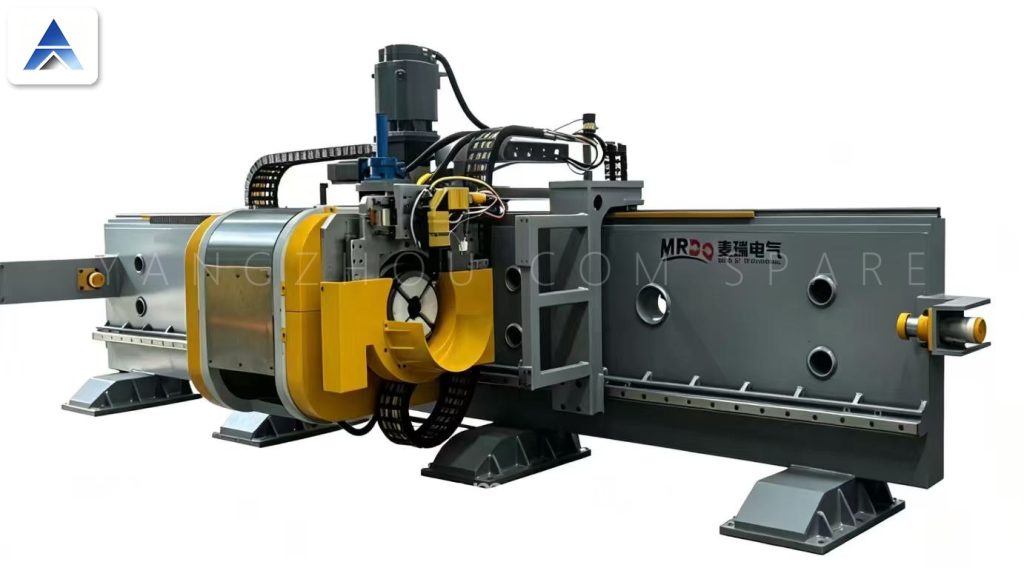
A tube mill flying cold saw cuts the tube while it is still moving. The saw carriage locks onto the tube, travels with it, and a circular cold saw blade drops through the wall — so the line never stops to cut. The result is a square, burr-free end with no heat-affected zone, produced at full line speed instead of at a friction saw’s sparks.
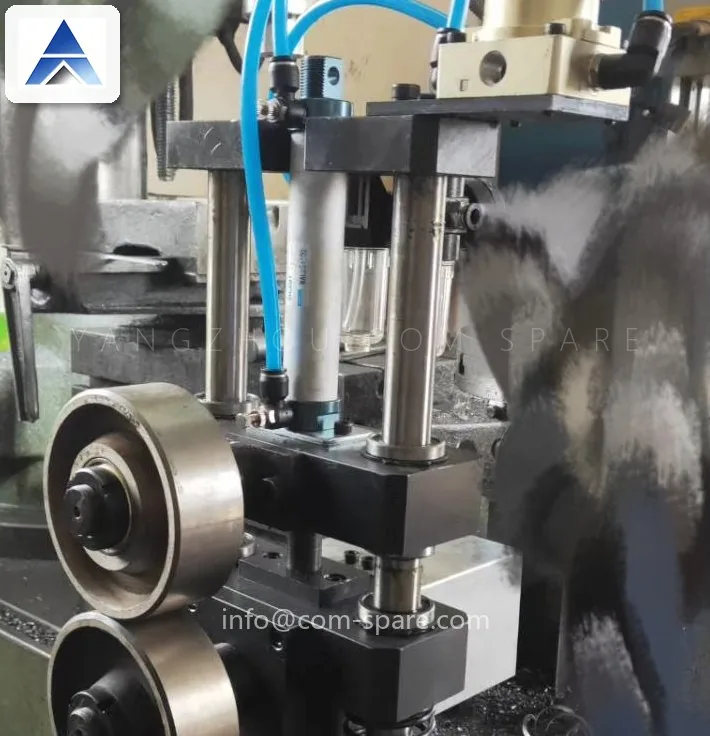
What has to happen in one cut cycle
- Detect length. An encoder on the sizing stand counts tube travel and triggers the cycle at the set length.
- Clamp and lock on. The carriage clamp grips the tube; the carriage is now travelling with the line, not against it.
- Blade feed. The head descends through the wall at a controlled feed rate. Too fast and the blade chips; too slow and the cut face work-hardens.
- Retract and release. Head up, clamp open, carriage returns to the start position and waits for the next signal.
The whole cycle is typically 2 to 6 seconds depending on wall and diameter. On thin wall, the carriage return is often the limiting factor, not the cut itself — which is why we match the saw to the mill’s speed rather than selling the largest model.
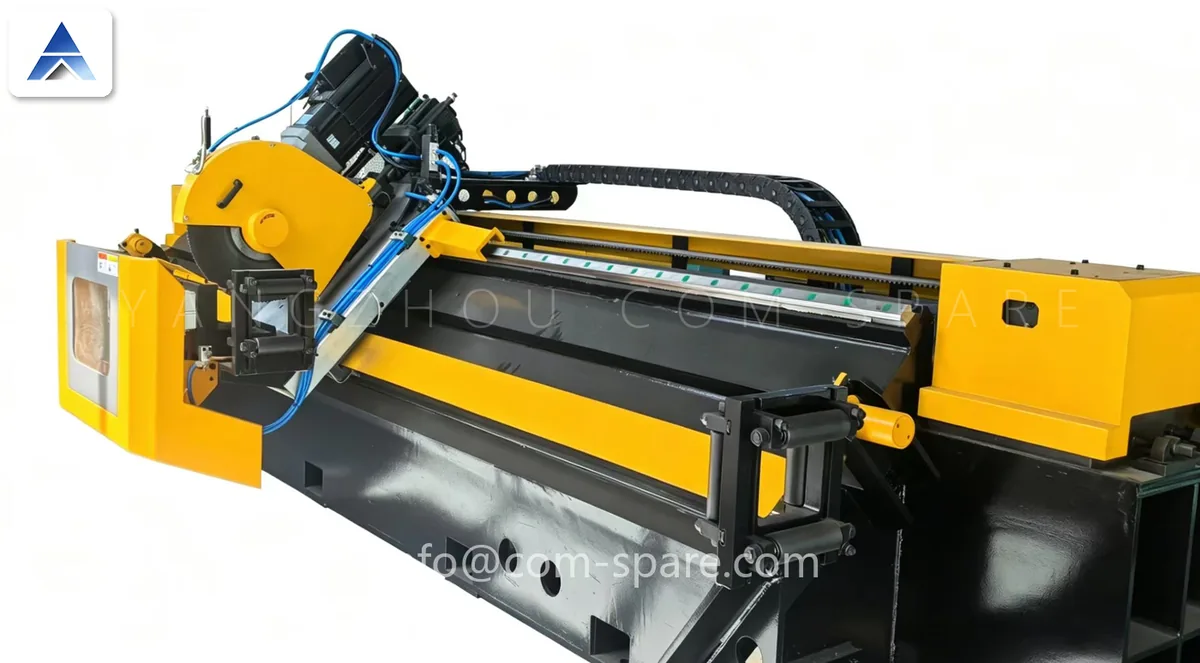
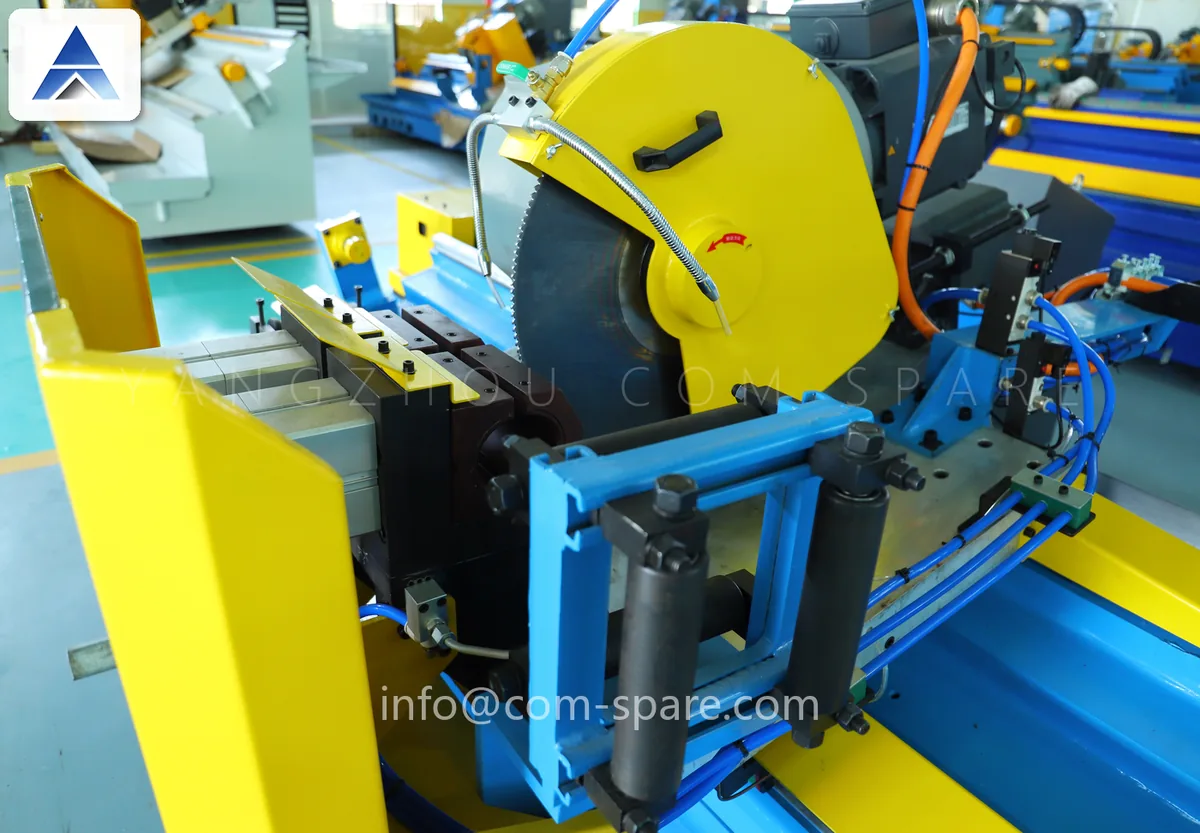
Why a cold saw and not a friction saw
| Flying cold saw | Friction saw | |
|---|---|---|
| Cut face | Machined, close to square | Torn, with a heavy burr on one side |
| Heat | Cold cut, no heat-affected zone | Burns the edge; the end is heat-affected |
| Burr | Small, removable with a light pass | Large; needs a deburring station or manual work |
| Sparks and smoke | Chips only | Heavy spark stream, smoke, noise |
| Consumable | Blade, resharpenable several times | Friction wheel, consumed quickly |
| Best for | Tube sold on end quality, or welded downstream | Rough structural work where the end is hidden |
On galvanised or coated tube the difference is larger still. A friction saw burns the coating back from the cut line; a cold saw does not, so the cut end still has coating on it when it reaches the customer.
Where cut length tolerance actually comes from
Most length errors on a flying saw trace back to four things, in this order: encoder slip, clamp wear, carriage guide play, and deceleration timing. The blade is rarely the cause.
- Encoder slip — a measuring wheel that rides on the tube will slip on oily or scaled surface. A direct-coupled encoder on a driven roll is more stable.
- Clamp wear — worn clamp jaws let the tube creep a fraction of a millimetre per cut. The error is not random; it is always in the same direction.
- Guide play — if the carriage can move sideways on its rail, the cut is not perpendicular to the tube axis, and the length measured along one side differs from the other.
- Deceleration — the trigger point must account for the time between the signal and the blade entering the wall. This is a parameter, and it drifts when line speed changes.
±1 mm is achievable on a well-maintained saw at steady line speed. ±3 mm is what most mills actually need. If your drawing asks for ±0.5 mm, the answer is usually a stop-and-cut arrangement or a second operation, not a more expensive flying saw.
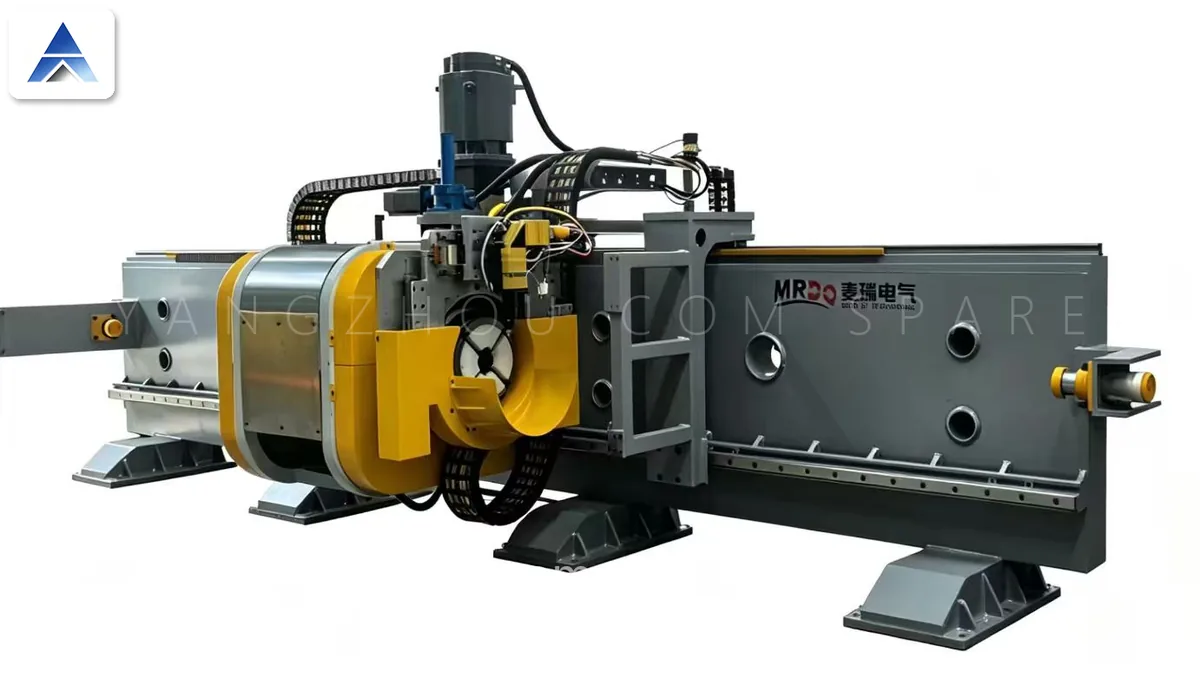
Blade life: what you can control
Blade life on a flying cold saw is set by wall thickness, tube material, blade grade, feed rate, clamping rigidity and coolant. The two variables most often ignored are clamping (a tube that vibrates destroys a blade edge in a shift) and feed rate on thin wall, where an aggressive feed work-hardens the cut face and the next cut starts on hardened material.
We supply HSS M42 and cermet-tipped blades, and we will tell you which one suits your wall and volume rather than quoting the most expensive option by default. Blade selection and the variables that shorten life are covered in Saw blade life on a flying cold saw: seven variables you can control.
What the cut face looks like
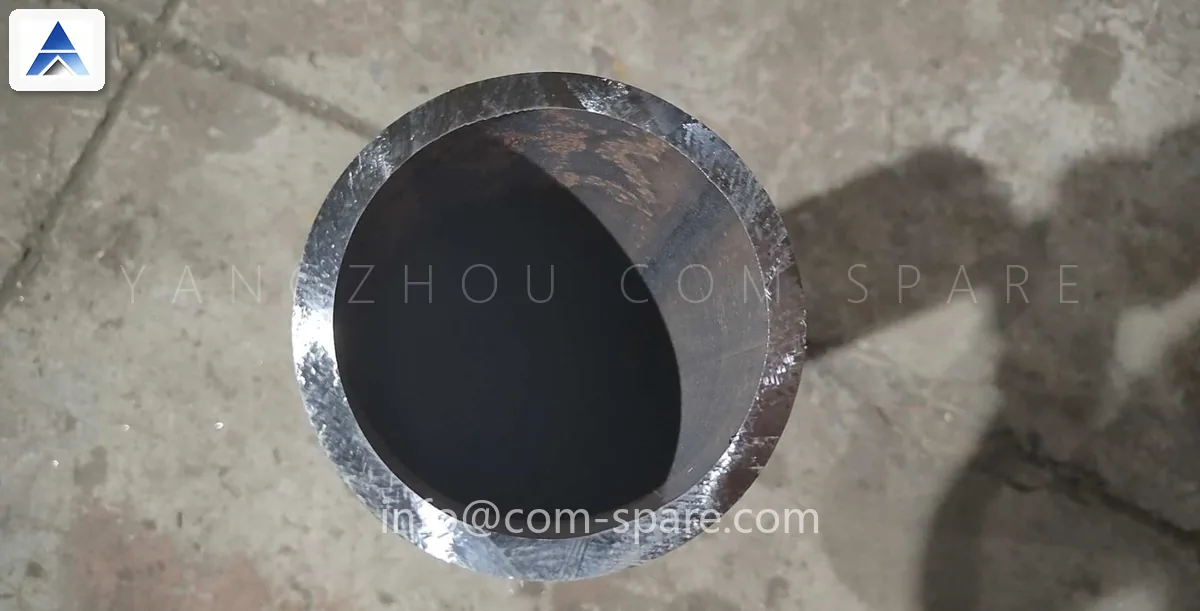
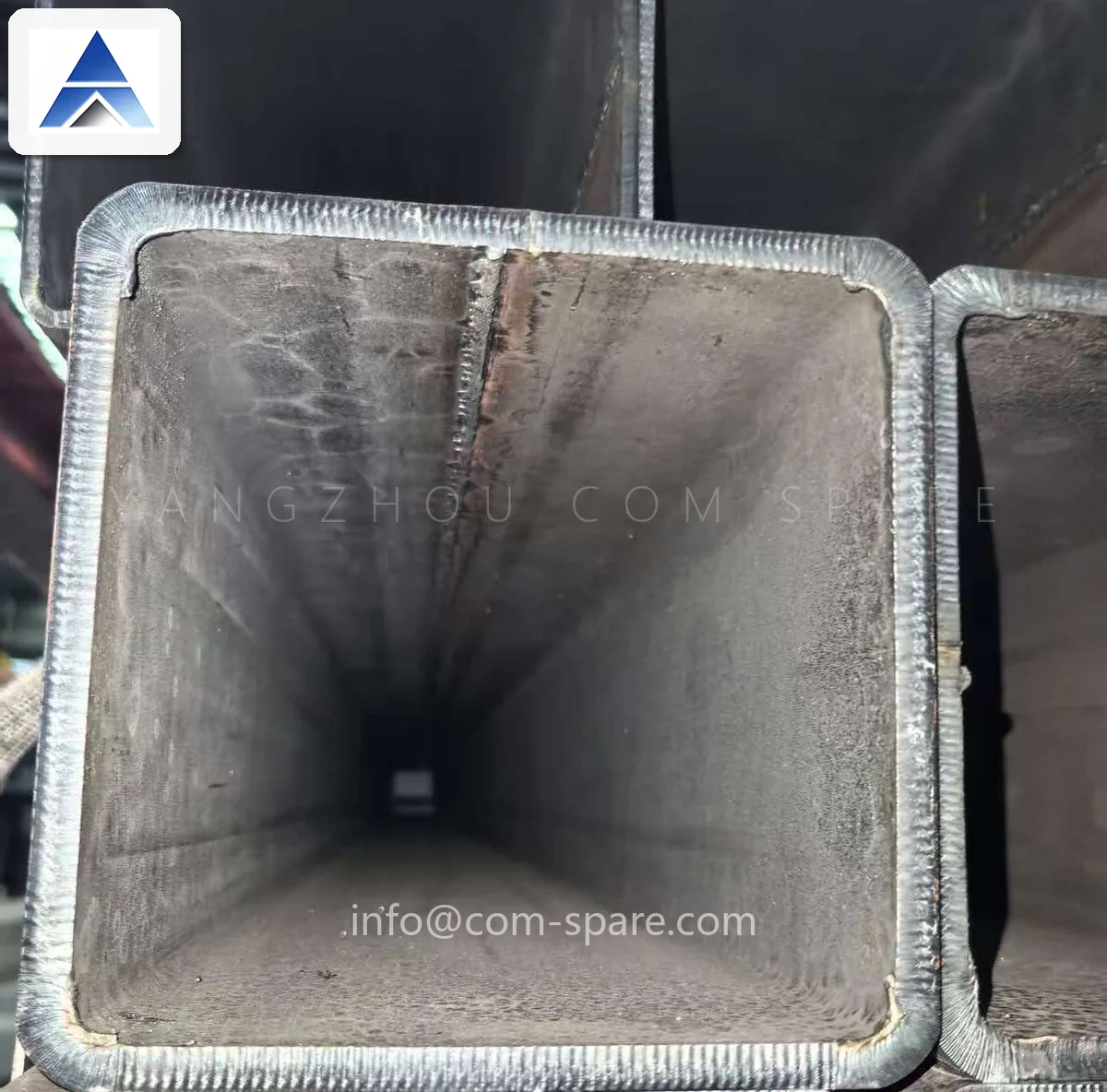
The photographs below are from our own saws, not from a catalogue. The first is a round tube cut with a cold saw blade; the second is a square section showing the same cut quality through a corner.
Matching the saw to your line
| Tube outside diameter | Typical wall | Saw type | Cut cycle |
|---|---|---|---|
| ø8 – ø32 mm | 0.3 – 1.5 mm | Compact flying cold saw | 1.5 – 3 s |
| ø32 – ø76 mm | 0.6 – 3.0 mm | Standard flying cold saw | 2 – 4 s |
| ø76 – ø165 mm | 1.0 – 5.0 mm | Heavy carriage cold saw | 3 – 6 s |
| ø165 – ø355 mm | 2.0 – 10 mm | Heavy cold saw, long stroke | 5 – 10 s |
Two numbers decide the model: the largest diameter and wall you will run, and the shortest cut length you sell. A short cut length on a large diameter is the hardest combination, because the carriage has less time to complete the cycle.
Replacing a friction saw on an existing mill
Most of the saws we ship replace a friction saw on a mill that is otherwise fine. The retrofit needs the existing cut-off mounting height, the line speed range, the tube centre height and the direction of travel. With those four we can match the mounting frame so the saw drops in without modifying the run-out table.
We build the saw in our own workshop, which is why a single saw can be quoted on its own without buying a line. If the cut-off is the station costing you money, that is what we quote.
Related products
Flying cold saw range · High speed flying cut-off · Milling type orbital cut off · Laser flying saw · ERW tube mill line.