
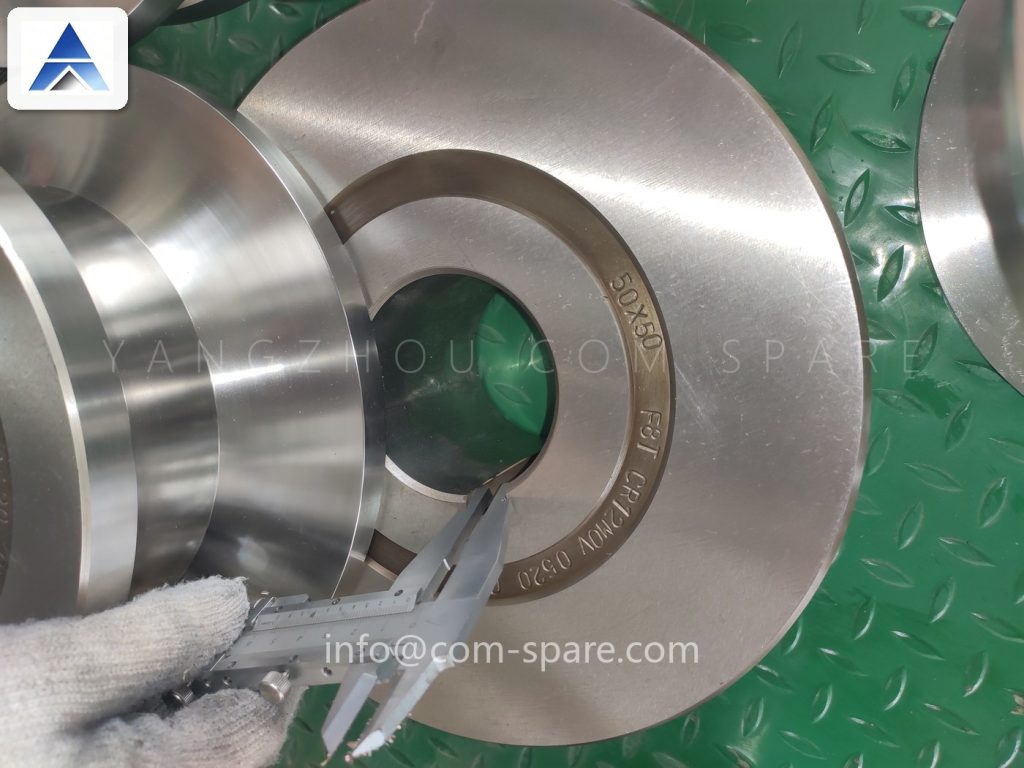
A tube mill mould is the roll set that gives a mill its shape — the pass profiles that decide diameter, roundness and weld quality. Buyers use the word mould and rolls for the same parts, so we quote them the same way: from your tube size, wall and mill model, not from a catalogue number.
The pass, not the picture
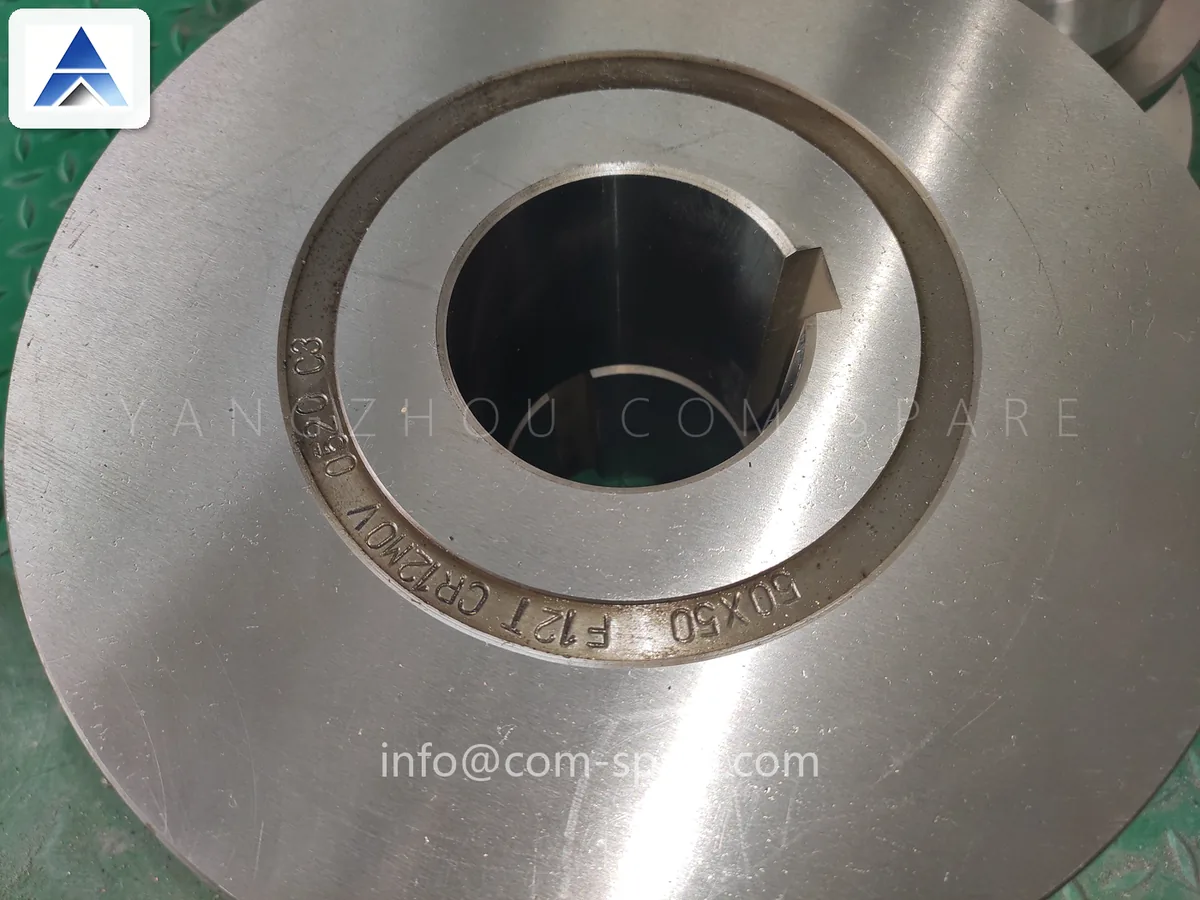
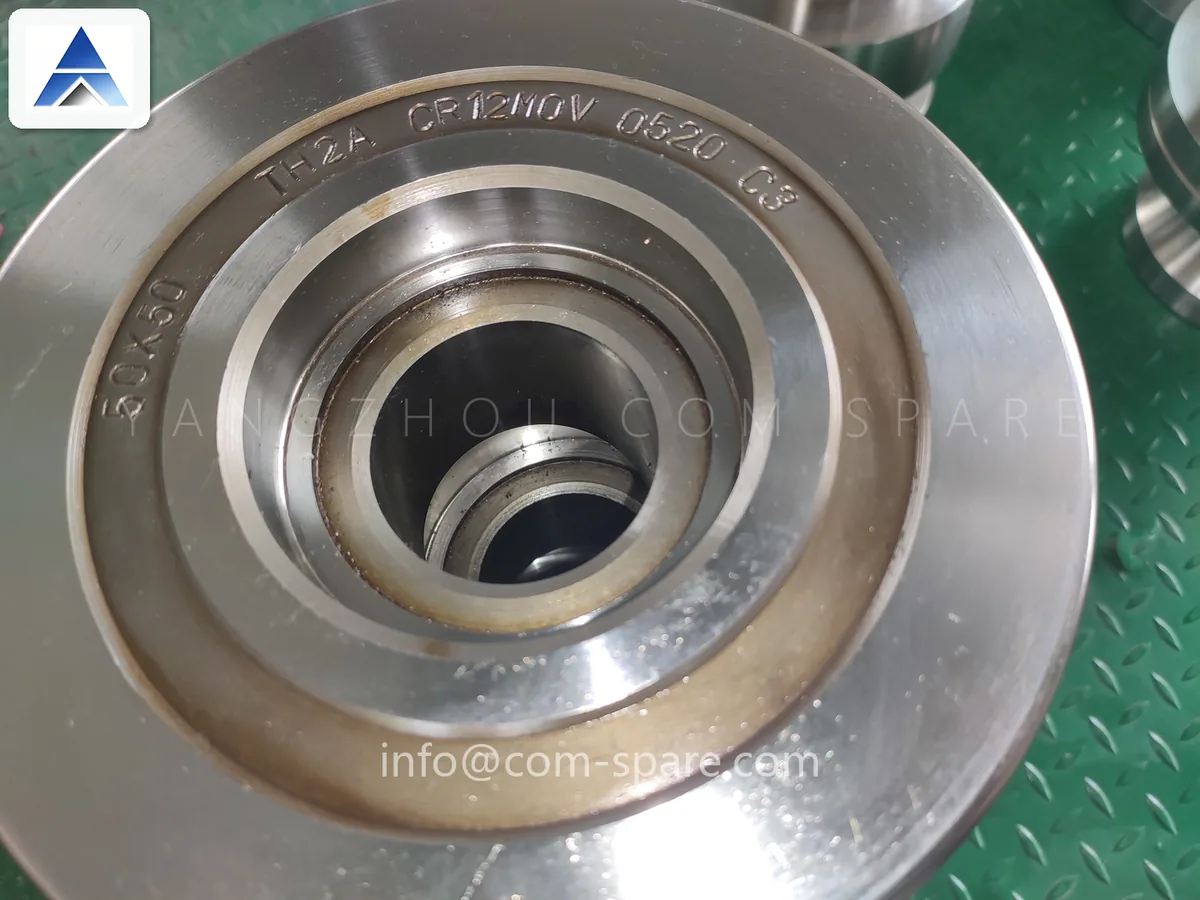
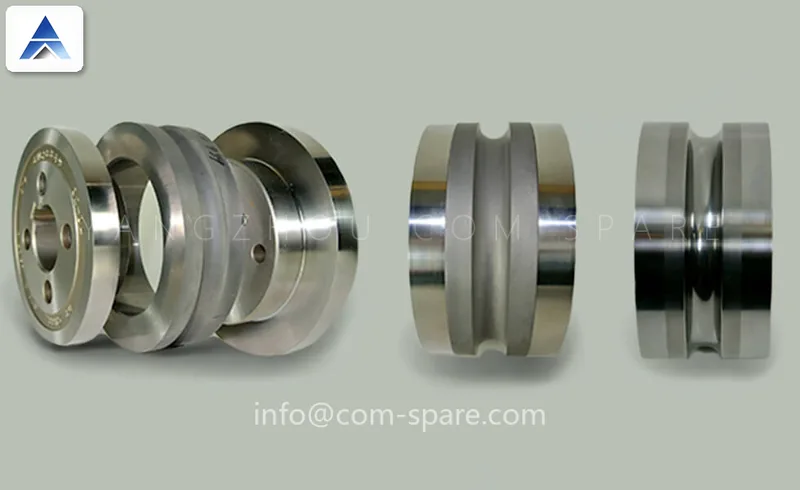
A mould is a hardened steel ring with a groove cut into its face. The groove is the pass: its width, depth and radius decide what the strip looks like after that stand. Two moulds with the same outside diameter and the same bore can be completely different parts, because the thing that matters is the profile in the middle.
This is why a photograph is not enough to quote from. A photo tells us the shape. It does not tell us the groove depth at the contact line, the corner radius, or the relief behind the flange — and those are the numbers that decide whether the tube comes out round or oval.
What a complete mould set contains
- Breakdown passes — the first stands, where flat strip is bent into a shallow U. Grooves here are wide and generous.
- Fin passes — the stands immediately before the welder, where the edges are brought together at the right angle and with the right gap.
- Sizing passes — after the weld, where the tube is brought to final diameter and roundness.
- Turks head or shaping group — for square, rectangular and special sections.
We supply the full line as a numbered set, or a single replacement where one pass is worn, chipped or was made to the wrong drawing. Sets are marked by stand and pass, so a twelve-stand changeover is a two-hour job, not a two-day one.
Five numbers that turn a drawing into a quote
| What we need | Why it matters | Typical form |
|---|---|---|
| Tube outside diameter | Sets the finished groove | ø8 to ø355 mm |
| Wall thickness | Sets groove depth and fin gap | 0.3 to 10 mm |
| Strip width | Confirms the flower pattern | From your slitting sheet |
| Bore and keyway | Fits your shaft, not ours | e.g. ø50 H7, 14 × 3.8 key |
| Stand and shaft diameter | Decides ring width and clamping | e.g. stand 7, shaft ø70 |
Send those five and we can quote a single pass or a complete set without a site visit. If you only have a worn mould and no drawing, send three measurements instead: bore diameter, overall width, and groove depth at the contact line. Those three plus the tube size are enough to reconstruct most profiles.
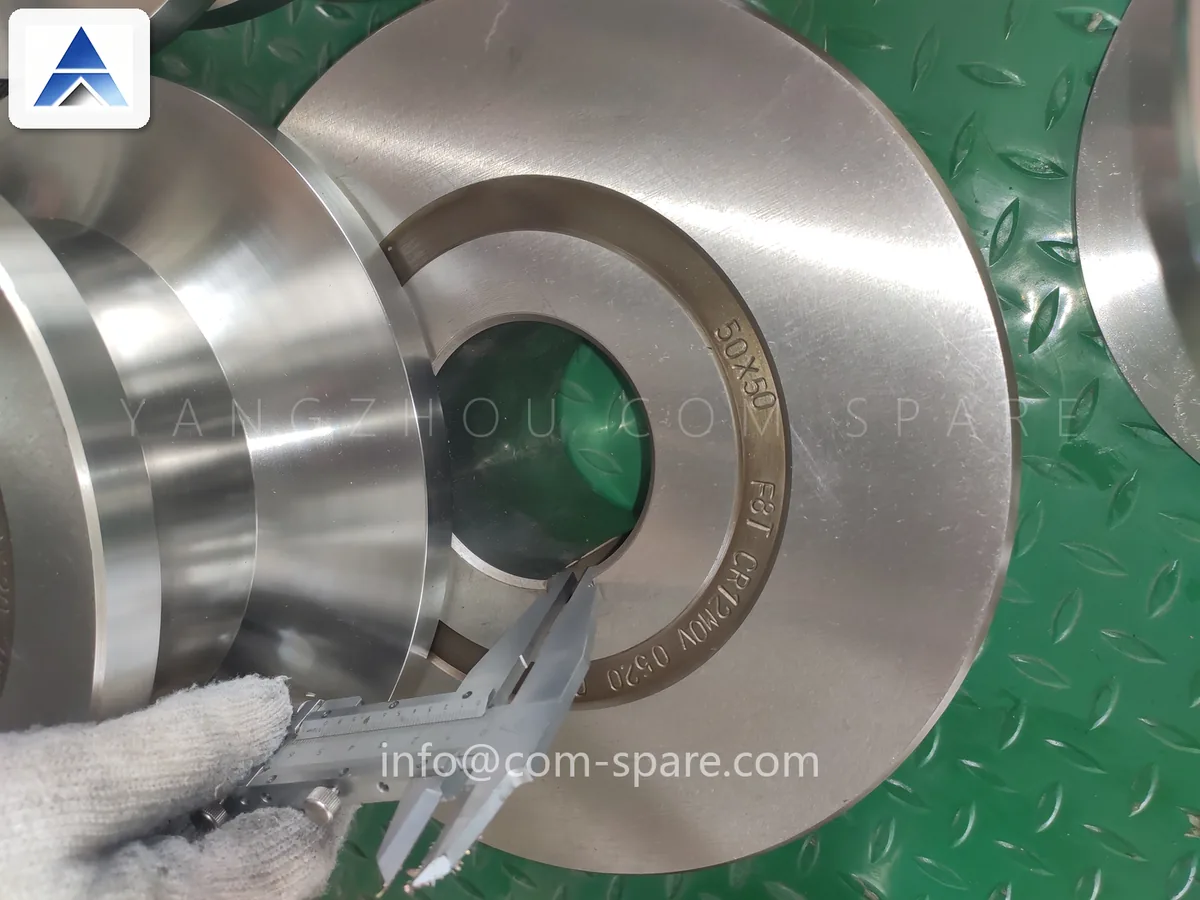
Where a mould actually fails
Moulds rarely fail in the middle of the groove. They fail at the edges of the work:
- Flange edge wear — the flange touches the strip edge and slowly loses its sharp corner. The tube starts to show a shine line and then a wave.
- Groove polishing — the contact surface work-hardens and polishes to a mirror. Friction drops, the strip slips, and the pass stops pulling its share of the forming.
- Keyway fretting — a loose key lets the mould rock on the shaft. The bore opens up and the pass line drifts.
- Heat cracking — usually a sign the mould was hardened to the wrong spec or run without coolant.
If a single size has gone out of tolerance and the mill has not been touched, the first thing to check is the pass that has run longest, not the welder.
Material and heat treatment
Standard tube mill moulds are made in Cr12MoV, a cold-work die steel with good wear resistance and modest distortion in hardening. Where the duty is heavier — thick wall, high speed, or abrasive coated strip — we use D2 or SKD11 equivalents. For high-volume thin-wall work, GCr15 bearing steel is sometimes specified for its fine, uniform structure.
What matters more than the grade on the certificate is what happens after machining: stress relief before hardening, vacuum or salt-bath hardening rather than open-flame, tempering to the drawing, and a final grind after heat treatment so the groove is true to the shaft, not to the soft blank. A mould hardened to 58–62 HRC and ground afterwards holds its pass for years. One hardened to the same number but ground before hardening will move.
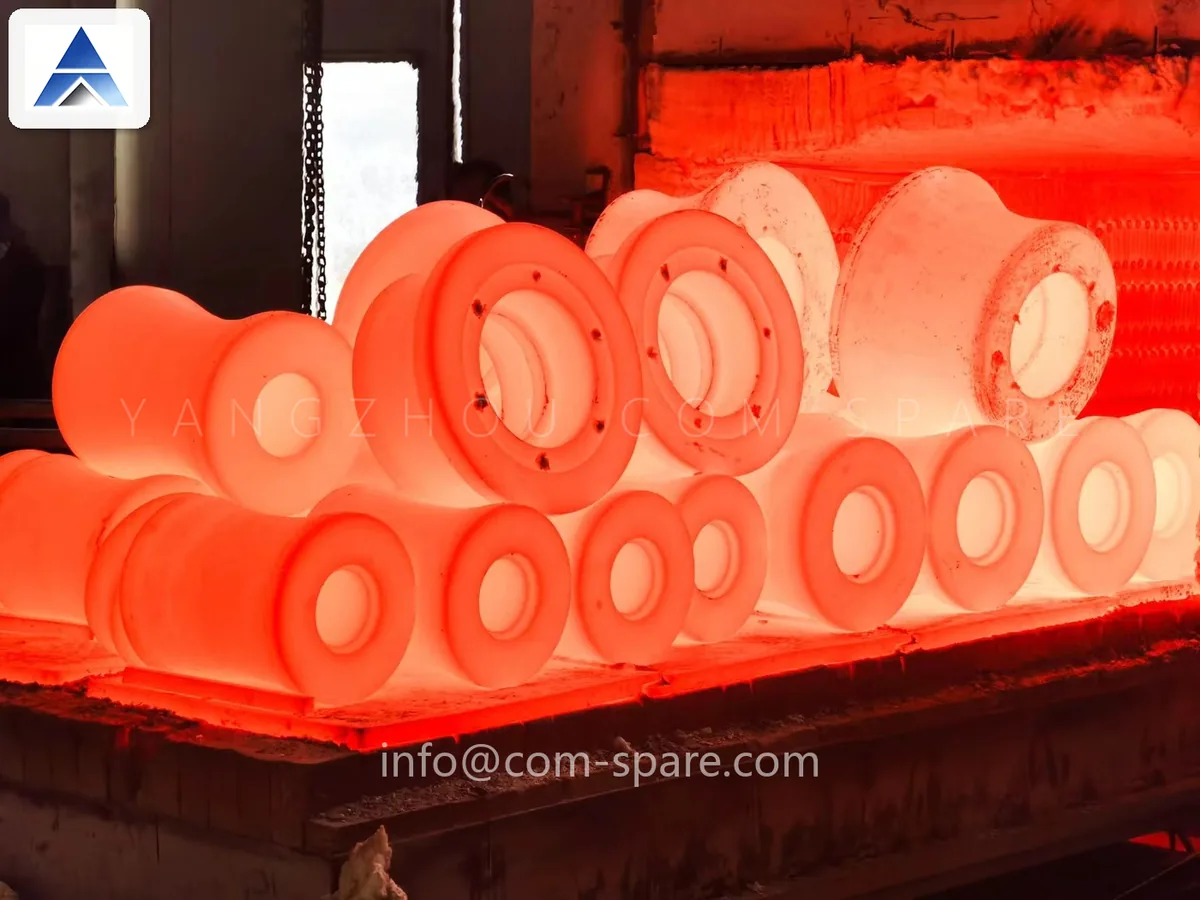
Large diameter moulds
Above about ø219 mm the problem stops being the profile and becomes the handling. A single mould for a 355 mm mill can weigh several hundred kilograms, and it has to be lifted, set, and clamped without distorting the ring. We machine these on our own lathes with the bore and the groove in one setup where size allows, so the groove runs true to the shaft rather than to the outside diameter.
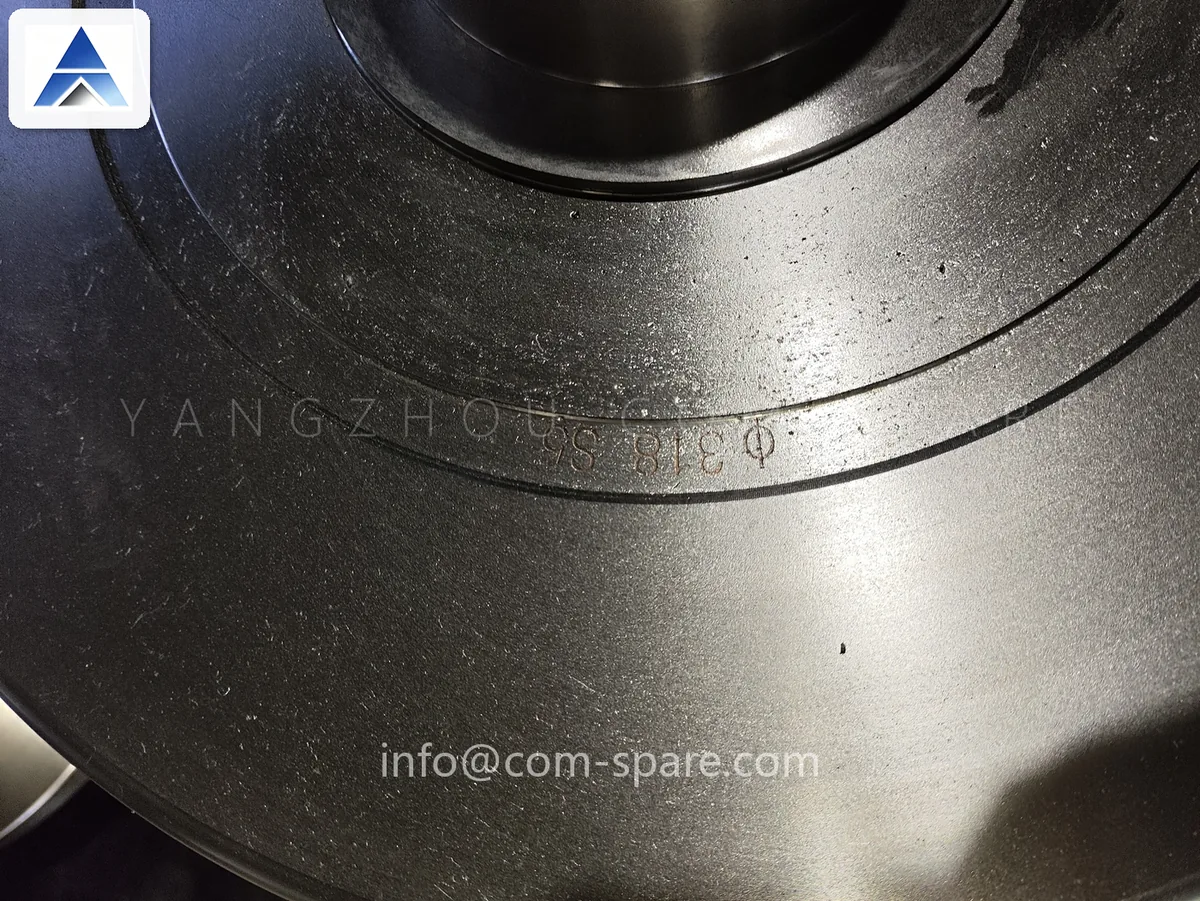
Square, rectangular and special sections
Square and rectangular tube is formed round first and then shaped, usually in a Turks head or a dedicated shaping group. Corner radius is a customer decision that must be written on the drawing — a 1.5 mm radius and a 3 mm radius are different moulds, and a mould made to the wrong radius produces a tube that fails the customer’s gauge even though every dimension on the mill is correct.
We also make moulds for oval, D-section, flat-oval and other profiles. Send the section drawing with the corner radii and the tolerance on the flat, and we will confirm the pass sequence before cutting steel.
Marking, packing and what arrives on site
Every mould in a set is marked with its stand and pass number, and the set ships with a pass list that matches the flower pattern drawing. Moulds are packed in wooden cases with rust preventive, separated so that grooves cannot touch each other in transit. For repeat orders we keep the profile drawing on file, so the second set matches the first one without sending samples back and forth.
Related products
Looking for something close to this? Tube mill roll sets · Roll design · Tube mill rolls · ERW tube mill line · Spare parts.
Material grades and hardening schedules are covered in more detail in Roll material and heat treatment: D2, Cr12MoV, GCr15, and pass design in Tube mill roll design: from flower pattern to the first good tube.

