
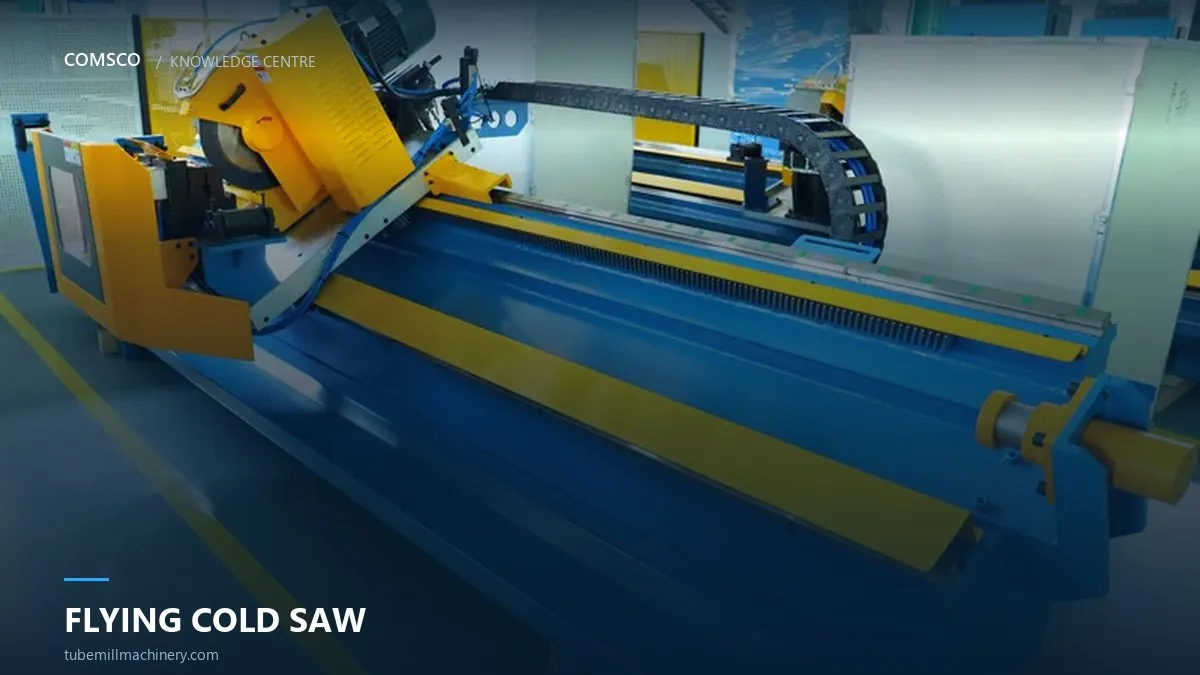
Blade cost per cut is one of the clearest numbers in a tube mill, and one of the most commonly misdiagnosed. When blades fail early, the first reaction is to change supplier. Usually the blade was not the problem — the way it was run was.
These are the seven variables that decide blade life, roughly in the order they should be checked.
1. Blade grade and tooth geometry against the wall
A blade that is right for 3 mm wall is wrong for 1 mm wall. Thin wall needs a fine tooth pitch and a geometry that stops the tooth from grabbing: too coarse a pitch and the tooth drops into the gap, catches, and chips. Thick wall needs chip clearance, or the gullets fill and the blade stalls.
As a starting point: HSS for mild carbon steel and general work, carbide-tipped for stainless, high-strength steel and long production runs. Tooth count and pitch should be selected for the thinnest wall you cut most often, not the thickest.
2. Peripheral speed
Every blade material has a sweet spot. Run too fast and the tooth tips overheat and soften; run too slow and the tooth rubs instead of cutting, which work-hardens the material and dulls the edge. Both look like “the blade wore out” and both are corrected by a speed change, not a purchase order.
Because line speed and cut cycle change through the shift, check that the saw’s cutting parameters are tied to the material recipe rather than left at whatever the last operator set.
3. Feed rate and feed profile
Forcing the blade through the wall is the fastest way to destroy it. A controlled feed that lets the teeth cut — with a softer entry and exit — gives more cuts per blade than a fast plunge, even though the fast plunge looks more productive. On a flying saw the cut has to finish inside the cycle time, so it is tempting to shorten it by feeding harder. That trade is usually wrong: a chipped blade stops the line, a slightly slower cut does not.
4. Clamping rigidity
Vibration is the quiet killer. If the clamp does not hold the tube firmly, or the clamp jaws are worn, the tube rings during the cut and the teeth take impact loads instead of steady chips. Symptoms are a howling cut, a poor face on one side, and blades that fail with chipped teeth rather than worn tips.
Check clamp jaw condition and clamping pressure as part of routine maintenance. A worn jaw is cheap; the blades it destroys are not.
5. Coolant and chip evacuation
Coolant does two jobs: it cools the tooth and it flushes the chip out of the kerf. A blocked nozzle, a weak pump or a misdirected jet produces a blade that runs hot, loads up with chips and wears on the flank. On tube, the inner burr also traps chips — which is why inner support and chip clearance matter as much as the outer jet.
6. Tube material and surface
Galvanised strip is abrasive to the coating side of the cut. Stainless work-hardens if the tooth rubs. High-strength structural tube at 550 MPa needs lower feed and a different geometry from mild steel at 235 MPa. If your product mix has changed since the blade specification was set, the blade is now wrong for the job — even though nothing on the machine failed.
7. Cut length and cycle count
Blade life is usually quoted in cuts, not metres. Cutting 1.5 m lengths means far more cuts per tonne than cutting 6 m lengths, so the same blade will look “worse” on a short-length order. Compare blade life in cuts per blade and cost per cut, not cost per month — otherwise a change in order mix looks like a quality problem.
What to record
| Record | Why it matters |
|---|---|
| Cuts per blade, by tube size | Reveals whether life changed or the mix changed |
| Failure mode: worn, chipped, cracked | Worn = speed/feed; chipped = clamping or pitch |
| Blade batch number | Separates a bad batch from a process problem |
| Cut face quality at start and end of life | Shows degradation before failure |
One more thing worth checking before blaming the blade: is the tube actually still? A saw that cuts a tube moving slightly out of sync will chip teeth no matter what blade is fitted. If blade failures cluster on one product size, look at tracking and clamp on that size first.
Our flying cold saw page lists the blade sizes and drive configurations for the MR series, and the spare parts section covers HSS and TCT blades for existing mills.
Frequently asked questions
How many cuts should one flying cold saw blade last?
It depends on wall thickness, material, blade grade and cut length. Thin-wall mild steel can give thousands of cuts per carbide blade; thick-wall or high-strength tube reduces that significantly. Track cuts per blade by size rather than expecting one number.
Why do my saw blades chip instead of wearing out?
Chipped teeth usually mean impact rather than abrasion: worn clamps, tube vibration, too coarse a tooth pitch for the wall, or a feed rate that is too aggressive at entry. Check clamping first.
Is carbide always better than HSS?
Not always. Carbide gives much longer life in stainless, high-strength steel and continuous production. For light duty on mild steel, HSS can be more economical per cut because the blade costs less.
Keep reading

ERW Weld Seam Defects: A Diagnostic Order That Saves Time
A tube mill with a weld problem usually gets adjusted in the order the symptoms appear, and the symptoms appear…

HF Weld Power and Coolant: Setting Up for Thin Wall
Thin wall is where a tube mill stops being a forming machine and starts being a heat balance. Below about…

Tube Mill Roll Changeover: Where the Hours Actually Go
Ask a mill manager how long a size change takes and the answer is usually a number with a shrug:…
Strip Edge Quality Before the Mill: Slitting, Burr and Weld Defects
Half the weld defects blamed on the welder are decided before the strip reaches the first stand. Edge burr, camber…
Accumulator Sizing: How Many Seconds of Strip Your Line Really Needs
An undersized accumulator turns every coil change into a mill stop. Here is the calculation, the three accumulator types, and…

Shear & End Welder: The Coil Joint That Decides Your Weld Seam
The joint made at the entry section passes through every forming stand and arrives at the weld point. If defects…
Related Products
Machines that do the job described above — quoted station by station.
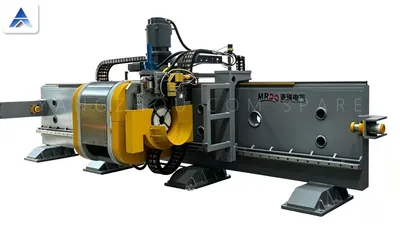
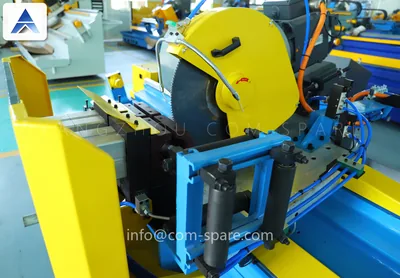 ProductFlying Cold SawBurr-free cut ends at line speed, no heat-affected zone.View specifications →
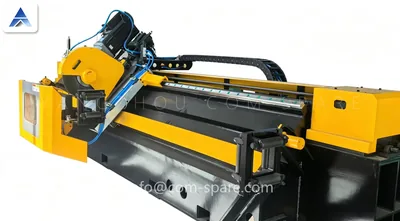
 ProductTube Mill Flying Cold SawCarriage, clamp and encoder in one frame.View specifications →
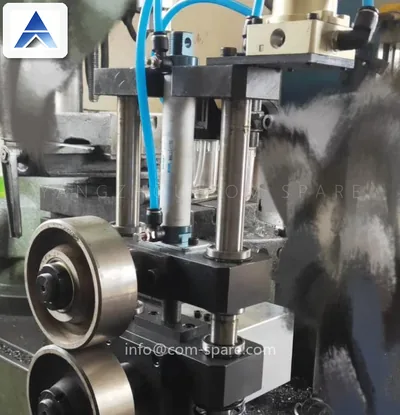
 ProductHigh Speed Flying Cut-OffShort cycle times for thin-wall, high-volume tube.View specifications →
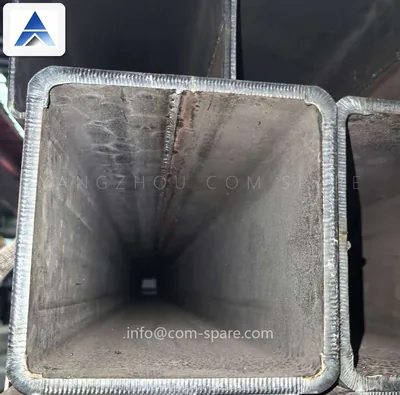
 ProductMilling Type Orbital Cut OffOrbital milling for large OD and heavy wall.View specifications →
 ProductLaser Flying SawNo blade, no burr, no blade consumable.View specifications →
Need this checked on your own mill?
Send tube OD, wall thickness and the symptom. We reply within one working day.

