
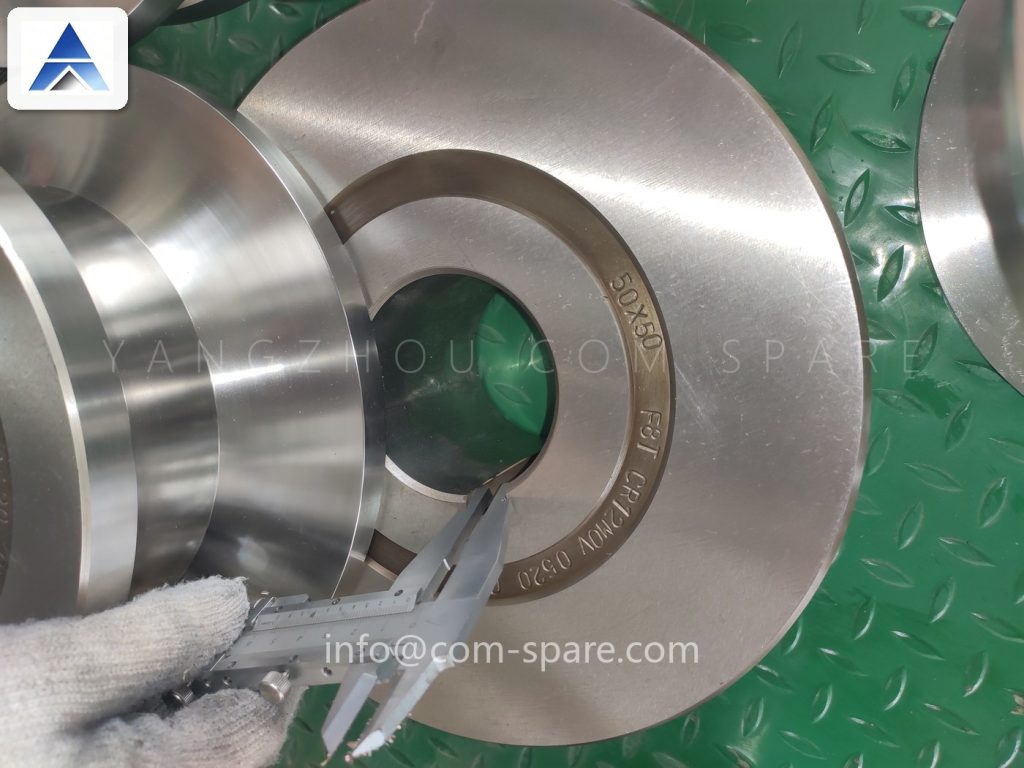
A forming mould works the strip into shape before the tube is closed. It is the highest wear item in the mill and the one most often replaced in an emergency.
Why it matters on the line
- Does the actual forming, so it carries the full strip tension and the full fold load
- Reground and reused many times; the profile height is consumed with every pass and eventually the roll is scrap
- We supply against a drawing, a sample roll or the mill model, and we tell you when a sample is not enough
- Every forming mould is marked with the pass line and the mill it belongs to before it leaves the shop
What we supply
| Item | What we hold to | Why it matters |
|---|---|---|
| Profile height | As drawing, or matched to your sample roll | Height is consumed every re grind |
| Hardness | HRC 58–62, vacuum hardened and tempered | Resists the fold load |
| Material | D3, D2 or H13 | Matched to the duty, not to a default |
| Marking | Mill, pass line and size stamped on the roll | Stops the wrong roll going into the wrong stand |
Every item is machined in our own workshop and marked before it is packed, so it goes back to the stand it came from. If you send us a drawing or a sample we work to that; if you are not sure what you need, send us the mill model and the pass line and we will tell you.
Related products
Tube mill rolls · Tube mill roll set · Tube mill roll design · ERW tube mill line
Send us the drawing or the sample
A drawing, a photo with a ruler in frame, or the mill model is enough for us to quote and to tell you honestly whether the item should be reground or replaced.