
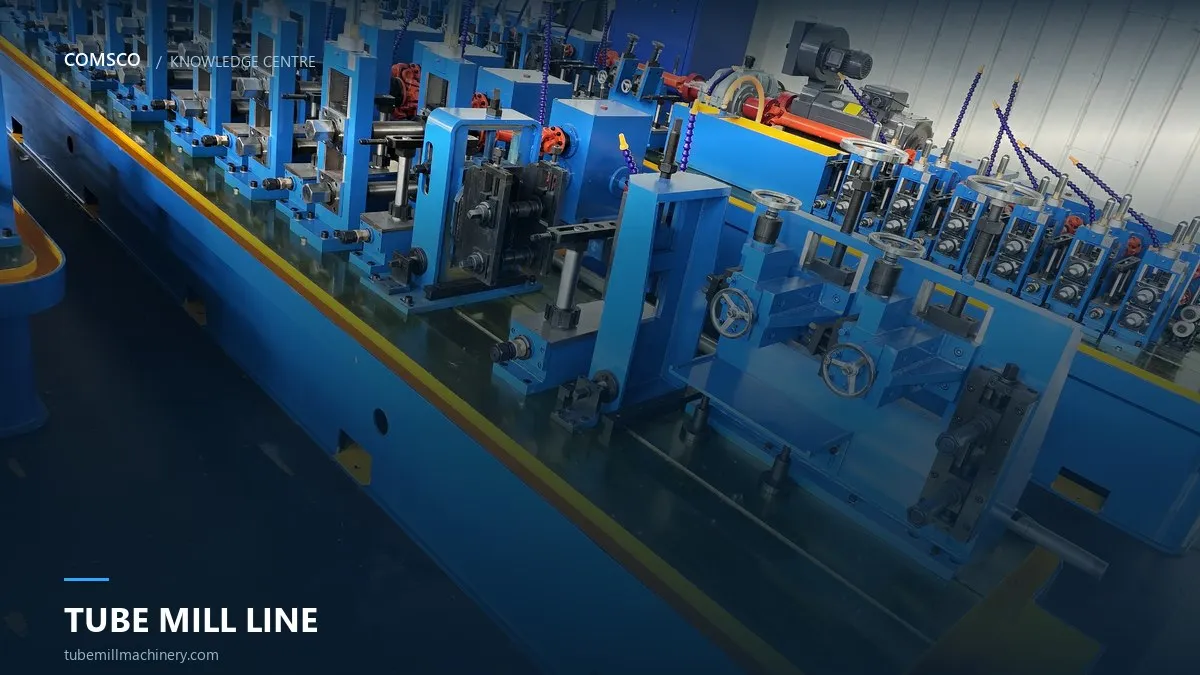
- The nine stations, in order
- Stations 1–3: the entry section decides whether you have a continuous process
- Station 4: forming sets the ceiling on everything downstream
- Stations 5–7: welding is a heat balance, not a power setting
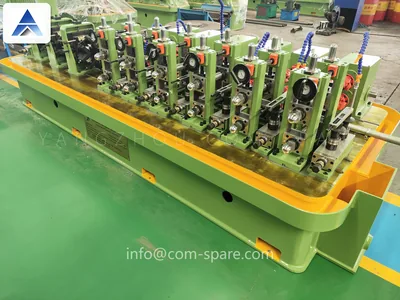
- Stations 8–9: where the customer measures you
- Where the problem actually started: a quick map
- What this means when you are buying a line
- Frequently asked questions
Most arguments about tube quality start at the wrong end of the line. A mill produces an oval tube, a wandering weld or a length that drifts, and everyone looks at the sizing stand or the saw. In practice an ERW tube mill line is a chain of nine stations, and each one owns a specific tolerance. Once you know which station owns which tolerance, diagnosis stops being guesswork.
This is the sequence we build and commission at COMSCO, from HG16 (ø8 mm) to HG355 (ø355 mm). The stations are the same at every size; what changes is rigidity, drive power and how much strip you need to store.
The nine stations, in order
| # | Station | Tolerance or property it owns |
|---|---|---|
| 1 | Uncoiler | Strip tension and coil concentricity |
| 2 | Shear & end welder | Joint quality; continuity of the strip |
| 3 | Accumulator | Whether the mill ever has to stop for a coil change |
| 4 | Forming section | Edge condition, strip centring, flower pattern |
| 5 | HF welder + impeder | Weld penetration, bead shape, heat input |
| 6 | Outer / inner scarfing | Weld bead height and inner bore cleanliness |
| 7 | Cooling | Metallurgy of the weld zone before sizing |
| 8 | Sizing + Turks head | OD, ovality, straightness, twist |
| 9 | Flying cold saw | Cut length, squareness, burr |
Stations 1–3: the entry section decides whether you have a continuous process
The entry section is not glamorous, and it is where most unexplained stoppages come from. An uncoiler that does not hold constant back tension lets the strip surge between the coil and the first forming stand. The forming section then receives strip at varying speed, the weld pool sees varying heat input, and the operator starts chasing the welder when the real problem is upstream.
The shear and end welder joins the tail of one coil to the head of the next. A joint that is not square, or is welded with a step at the strip edge, will pass through every forming stand and arrive at the weld point as a local disturbance — usually visible as a short section of heavy bead or a weld notch. If you see a defect repeating at a fixed interval equal to your coil length, look at the welder before you look anywhere else.
The accumulator buys you time. Its job is to store enough strip for the mill to keep running while the entry stops, the ends are sheared and the joint is welded. If the accumulator is undersized, the mill slows or stops at every coil change, the weld zone cools unevenly, and the first metres after restart run at a different temperature from steady state. That is one of the reasons tube made just after a coil change is often the first to be scrapped.
Station 4: forming sets the ceiling on everything downstream
No welder can fix a strip that arrives at the squeeze rolls with non-parallel edges. Forming is where the strip is bent progressively — breakdown, then intermediate passes, then fin passes that present the two edges to the weld point at the correct angle and gap.
Three things are decided here:
- Edge alignment. If one edge leads the other, the weld is made between two surfaces that only touch at a line. The result is a cold weld or a seam that opens on expansion.
- Strip centring. A strip running 1 mm off centre loads the stands asymmetrically, produces a spiral, and shows up as twist in the finished tube.
- Work hardening. Bending the same strip too sharply in too few passes raises yield strength at the corners. For high-strength or thick-wall material the flower pattern needs more passes, not more pressure.
Stations 5–7: welding is a heat balance, not a power setting
The HF welder does not “melt” the edges — it brings them to forging temperature, and the squeeze rolls forge them together. The variables that matter are welding power, frequency, V-angle, impeder position and squeeze pressure. Change one and the others move.
Two practical points come up on almost every commissioning:
- Impeder cooling. A hot impeder loses its magnetic properties, the current spreads, and the weld goes wide and shallow. If weld quality degrades over a shift rather than immediately, check impeder cooling water before touching the power setting.
- Inner bead. For tube that will be bent, swaged or used for fluid, the inner bead matters as much as the outer. An inner scarfing tool that is set too light leaves a ridge that interferes with mandrels downstream; set too heavy and it scores the bore.
Cooling between welding and sizing is part of the process, not a utility. Sizing a weld zone that is still at 400 °C produces a tube that measures correctly on the line and moves after it cools. If your OD is good at the saw and out of tolerance after cooling, this is the station to look at.
Stations 8–9: where the customer measures you
Sizing stands correct OD and ovality; a Turks head (or a sizing/straightening group) controls straightness and twist. Sizing works by controlled plastic deformation, so it can correct a small error and hide a large one. A mill that needs heavy sizing pressure to make a round tube is telling you the forming section is not closing the section properly.
The flying cold saw then cuts to length without stopping the line. Its accuracy depends on three things: the encoder that measures tube travel, the clamp that holds the tube during the cut, and the carriage that tracks line speed. If cut lengths vary, the cause is usually one of those three rather than the blade.
Where the problem actually started: a quick map
| What you see | First station to check |
|---|---|
| Weld defect repeating every coil | Shear & end welder |
| Twist along the tube | Forming centring / sizing alignment |
| Ovality that changes with line speed | Sizing stand rigidity and drive sync |
| Weld width drifting over a shift | Impeder cooling, then power |
| OD correct at saw, out after cooling | Cooling before sizing |
| Length tolerance wandering | Encoder, clamp, carriage |
| Scratches on one face only | Guide rolls / side roll pressure |
What this means when you are buying a line
Price comparisons between tube mill lines usually compare the visible parts: number of stands, welder power, saw brand. The differences that decide whether the line runs at 60 m/min or 35 m/min are less visible — shaft rigidity, bearing class, stand alignment after welding, accumulator capacity and how the drives are synchronized.
Ask for the strip width range, the coil weight the entry section is designed for, the accumulator storage in metres, and the sizing stand count. Those four numbers tell you more about day-to-day output than the maximum line speed on the brochure.
If you are specifying a line now, our ERW tube mill line page lists the HG series from ø8 mm to ø355 mm, and the ERW tube mill page covers the welding section in more detail.
Frequently asked questions
How many stations does an ERW tube mill line have?
A complete line normally has nine functional stations: uncoiler, shear and end welder, accumulator, forming section, high-frequency welder, scarfing, cooling, sizing and straightening, and flying cut-off. Small lines may combine stations; large lines add entries such as a strip flattener or a second uncoiler.
What line speed can an ERW tube mill run at?
Speed depends on diameter and wall thickness, not on the model number alone. Small tube around ø8–32 mm can run at 60–120 m/min; medium tube around ø114–219 mm typically runs at 25–50 m/min; large tube at ø355 mm runs considerably slower. The same mill cannot reach its maximum speed at its maximum wall thickness.
Which station has the biggest effect on weld quality?
The forming section. The welder can only join edges that arrive parallel, at the right gap and at the right temperature. Most weld defects that are blamed on the welder originate in edge presentation or strip tension.
Keep reading
HF Weld Power and Coolant: Setting Up for Thin Wall
Thin wall is where a tube mill stops being a forming machine and starts being a heat balance. Below about…
Why a Tube Mill Loses Size After the First Hour — and Where to Look First
OD is correct at start-up, then creeps out of tolerance as the mill warms up. Nine times out of ten…
Specifying a Tube Mill Line: Ten Numbers to Bring to the First Meeting
Most first quotations are wrong because the buyer sends a diameter range and nothing else. These ten numbers let a…
Related Products
Machines that do the job described above — quoted station by station.
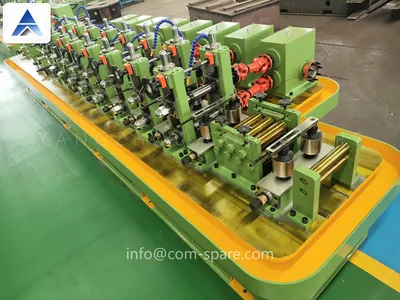 ProductERW Tube Mill LineComplete ERW lines from coil to bundle, Φ8–355 mm.View specifications →
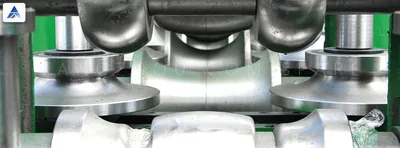 ProductERW Tube MillForming, welding, sizing and cut-off as one pass line.View specifications →
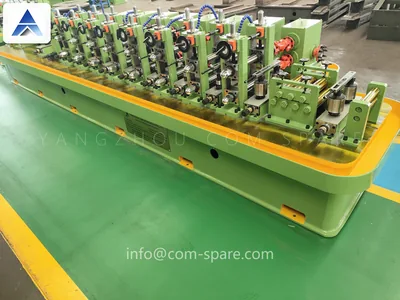 ProductHF Tube MillSolid-state welders sized to your heaviest wall.View specifications →
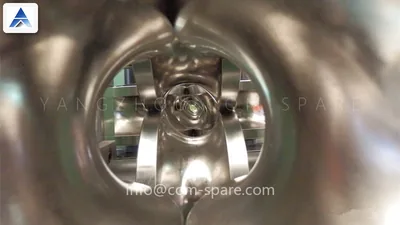 ProductSteel Tube MillStrip width, wall and grade decide the whole layout.View specifications →
 ProductAutopacking MachineCount, stack and strap finished tubes.View specifications →
Need this checked on your own mill?
Send tube OD, wall thickness and the symptom. We reply within one working day.

