
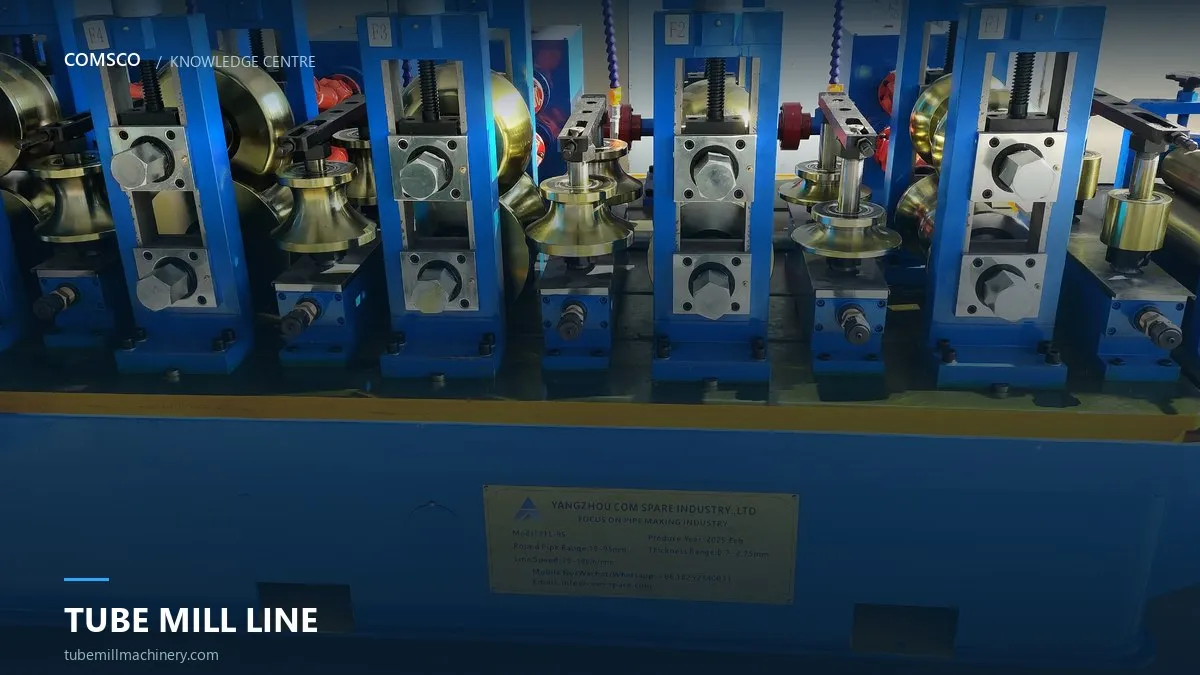
- 1. The tube size range, in both directions
- 2. Wall thickness range
- 3. Material grade and yield strength
- 4. Coil size: weight, ID and OD
- 5. Strip width range
- 6. Target output, in metres per shift or tonnes per month
- 7. Cut length range
- 8. Dimensional tolerance and standard
- 9. Power supply and utilities
- 10. Workshop dimensions, crane capacity and layout constraints
- Two more that are worth stating
- How these numbers change the quotation
- The mistake that costs the most
- Frequently asked questions
Every week we receive enquiries that say, in effect: “we want to make 20–100 mm round tube, please quote”. A supplier can answer that with a number, but the number will not be the right one. An ERW tube mill line is sized by a handful of inputs, and if three of them are missing the quotation is a guess with a price attached.
Here are the ten numbers that actually change the design. Bring them to the first meeting and the technical proposal stops being generic.
1. The tube size range, in both directions
Not just the maximum OD. The minimum matters as much, because a mill sized for ø114–219 mm cannot form ø20 mm tube — the stands are too far apart and the rolls too large. When a buyer needs a wide range, the honest answer is often two lines rather than one compromise.
Also state whether you need square and rectangular sections, and their sizes. A round line can make square tube with an added Turks head and a square roll set, but the wall thickness limit for square tube is lower than for round tube of the same mill.
2. Wall thickness range
Wall thickness drives forming pass count, welder power, squeeze pressure and saw blade selection. The upper limit is what sizes the mill; the lower limit is what decides whether you need strip edge control and a lighter weld setup. A line specified only at 3 mm wall will struggle at 0.8 mm.
3. Material grade and yield strength
Mild steel at 235 MPa forms very differently from high-strength strip at 550 MPa. Higher yield means more springback, more forming passes and more drive torque. If you plan to run galvanised, stainless or API-grade material, say so at the enquiry stage — the roll material and the welding parameters both change.
4. Coil size: weight, ID and OD
Coil weight decides the uncoiler mandrel, the coil car and the foundation load. Coil ID decides the mandrel expansion range. If your local supply arrives in 5-tonne coils but the quoted uncoiler is designed for 3 tonnes, the line will be limited by its entry section, not by its mill.
5. Strip width range
This comes from your tube sizes, but state it explicitly. Strip width sets the accumulator roll face, the welder shear width and the guide roll positions. It is also the number that reveals whether your slitting supply is consistent: a strip that varies ±1 mm in width will produce a weld gap that varies ±1 mm.
6. Target output, in metres per shift or tonnes per month
“High speed” is not a specification. Give the output you need to sell, then let the supplier propose the mill size and line speed that reaches it. Output divided by working hours gives the required average speed; the mill’s rated maximum will be higher than that average, because coil changes, size changes and stoppages all take time.
7. Cut length range
Short lengths and long lengths stress different parts of the cut-off. A saw cutting 6 m lengths needs a longer run-out table and more accurate tracking than one cutting 1.5 m. State both ends of the range and the tolerance you sell against, for example ±1 mm or ±3 mm.
8. Dimensional tolerance and standard
Are you selling to a structural standard, a fluid-transport standard, or a customer drawing? Tolerance on OD, wall, straightness and squareness decides the sizing stand count, the Turks head configuration and how much inspection equipment you need. Without this number the supplier will quote to a general commercial tolerance, which may not be what your customer accepts.
9. Power supply and utilities
Voltage, frequency, available transformer capacity and cooling water quality. A 355 mm line with a high-frequency welder can draw several hundred kVA; if the site transformer cannot support it, the configuration changes or the project needs an upgrade. Water quality matters for impeder and welder cooling — hard water scales the cooling passages and the welder derates.
10. Workshop dimensions, crane capacity and layout constraints
The line length for a ø219 mm mill is roughly 60–90 m from uncoiler to run-out table, depending on accumulator type and cut length. Column spacing, crane capacity for the heaviest component, and the direction material flows in and out of the bay all affect the layout — and the layout affects cost more than most buyers expect.
Two more that are worth stating
- Automation level. Manual coil loading, automatic shear welding, servo cut-off, automatic bundling and remote diagnostics are separate decisions with separate costs. Decide which ones you need for your labour situation, not which ones sound modern.
- Spare parts and roll sets. Ask what a full roll set costs for your most common size, and what the lead time is. Over five years this is often a larger number than the difference between two machine quotations.
How these numbers change the quotation
| Input | What it changes |
|---|---|
| Max OD 219 mm vs 114 mm | Stand size, shaft diameter, drive power, foundation |
| Wall 4 mm vs 1.5 mm | Welder power, squeeze pressure, saw blade type |
| Coil 10 t vs 3 t | Uncoiler, coil car, accumulator capacity, civil works |
| ±0.5 mm vs ±2 mm length | Servo cut-off vs standard, encoder class, run-out design |
| Square tube included | Turks head, square roll sets, extra sizing stands |
The mistake that costs the most
Buying a mill larger than the product mix requires. A ø355 mm mill running ø60 mm tube is not “future proof”; it is a machine running far below its design point, with poor strip guidance, high energy consumption per tonne and expensive roll sets. The most profitable lines we see are the ones sized to the sizes the owner actually sells, with a second line added when the range grows.
If you want a starting point, our ERW tube mill line range covers ø8–355 mm in the HG series. Send the ten numbers above and we will tell you which model fits — and which of your numbers is the one limiting the design.
Frequently asked questions
What is the most important specification for an ERW tube mill line?
The maximum outside diameter combined with the maximum wall thickness. Those two numbers size the stands, the drive power, the welder and the saw. Everything else adjusts around them.
Can one tube mill line make both round and square tube?
Yes, with a Turks head or forming section for square and rectangular sections and the matching roll sets. The wall thickness limit for square tube is usually lower than for round tube on the same mill, so the square sizes should be specified separately.
How long does it take to change tube sizes on a line?
On a conventional mill, a full roll change for a new diameter takes several hours. Quick-change stand designs and pre-set roll cassettes reduce this considerably, which matters if you sell many sizes in small batches.
Keep reading
HF Weld Power and Coolant: Setting Up for Thin Wall
Thin wall is where a tube mill stops being a forming machine and starts being a heat balance. Below about…
Why a Tube Mill Loses Size After the First Hour — and Where to Look First
OD is correct at start-up, then creeps out of tolerance as the mill warms up. Nine times out of ten…
ERW Tube Mill Line: What Each of the Nine Stations Actually Decides
A station-by-station walk through an ERW tube mill line — what each unit controls, which tolerances it owns, and where…
Related Products
Machines that do the job described above — quoted station by station.
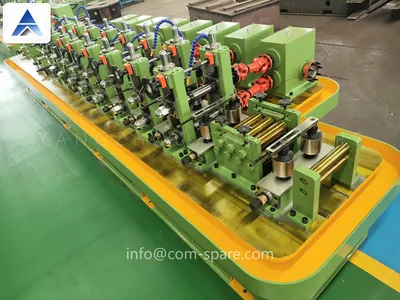 ProductERW Tube Mill LineComplete ERW lines from coil to bundle, Φ8–355 mm.View specifications →
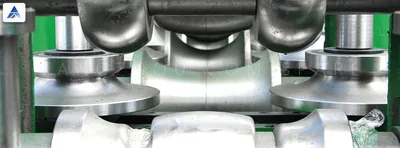 ProductERW Tube MillForming, welding, sizing and cut-off as one pass line.View specifications →
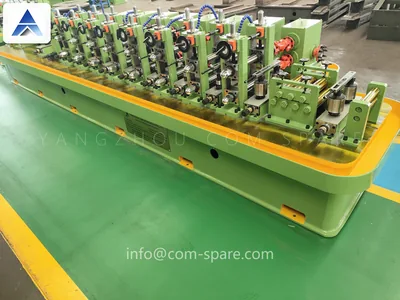 ProductHF Tube MillSolid-state welders sized to your heaviest wall.View specifications →
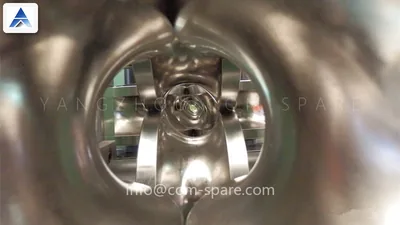 ProductSteel Tube MillStrip width, wall and grade decide the whole layout.View specifications →
 ProductAutopacking MachineCount, stack and strap finished tubes.View specifications →
Need this checked on your own mill?
Send tube OD, wall thickness and the symptom. We reply within one working day.

