
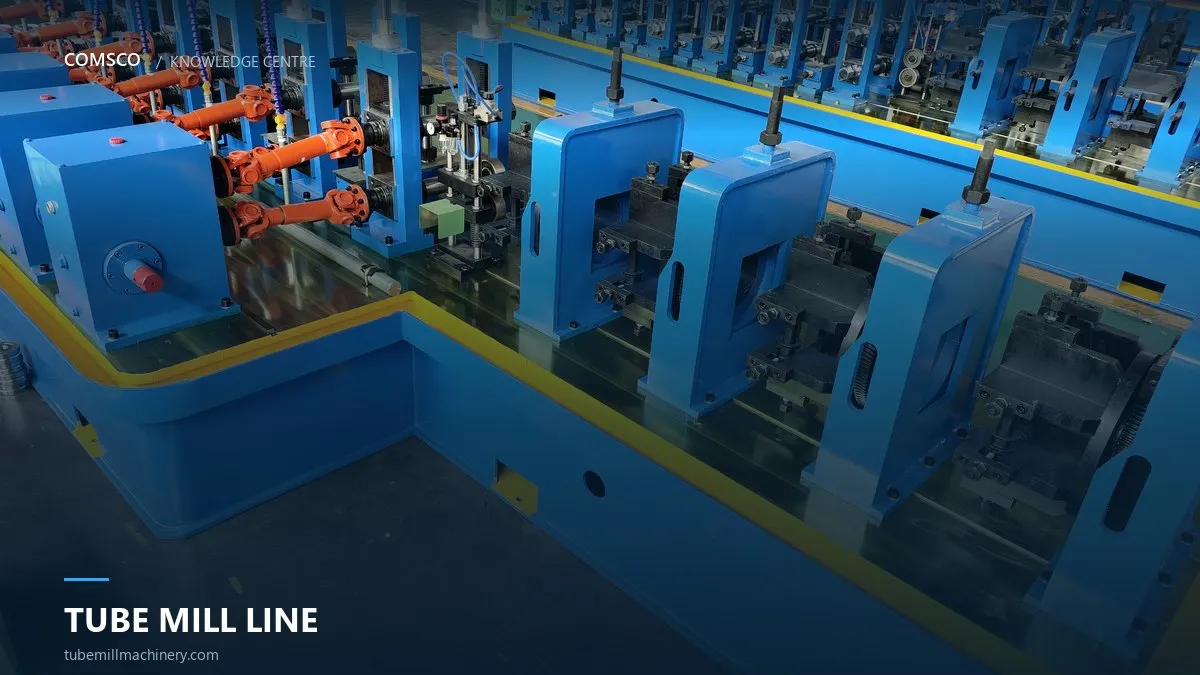
- First: is it thermal, or is it mechanical?
- Cause 1: thermal growth in stands, shafts and bearings
- Cause 2: roll wear in the sizing stands
- Cause 3: strip width variation
- Cause 4: cooling position and cooling water
- Cause 5: sizing pressure and stand alignment
- The check order that works
- What good practice looks like
- Frequently asked questions
A familiar scene: the first tubes off the line measure ø48.2 mm, the operator is happy, and two hours later the same setting is producing ø48.7 mm. Nothing was adjusted. The mill “lost size” on its own.
Size drift is normal physics, not a defect, and it almost always comes from one of five places. What matters is checking them in the right order, because the first two are quick and the last three take real work.
First: is it thermal, or is it mechanical?
Run the mill for twenty minutes at production speed, stop, and measure the same tube twice — once hot at the saw, once after it has cooled to room temperature. If the hot measurement is larger and the cold measurement is stable, your drift is thermal. If the cold measurement is also moving, it is mechanical or material.
This single test separates the two families of cause and saves hours. Thermal drift is corrected by warm-up procedure; mechanical drift is corrected by maintenance.
Cause 1: thermal growth in stands, shafts and bearings
As the mill warms up, stand housings, shafts and bearings expand. The effect is small per component but accumulates across a sizing stand: a few hundredths of a millimetre of growth at each roll gap adds up to a visible change in OD.
The usual symptoms:
- OD drifts in the first 45–90 minutes, then stabilises
- The drift repeats every morning and after every long stop
- Wall thickness stays constant while OD moves
The fix is procedural rather than mechanical: define a warm-up period, run scrap or lower-grade material through it, and only then set the final roll gaps. Lines that start at full speed from cold will always chase tolerance for the first hour.
Cause 2: roll wear in the sizing stands
Sizing rolls work hard and wear at the contact line. As the groove wears, the effective pass grows and the tube comes out slightly larger. Wear is progressive and does not recover when the mill cools, which is how you tell it apart from thermal drift.
Check the roll surface with a profile gauge or a light impression. If the contact band is polished and wider than when new, the groove has opened. Rotating roll positions between stands, or moving a lightly worn set from a finishing stand to a roughing stand, extends tooling life — but only if you record wear, which most mills do not.
Cause 3: strip width variation
For round tube the strip width is approximately the neutral-axis circumference, W ≈ π × (OD − t). A 1 mm width variation changes the closed circumference, and the excess material has to go somewhere: it becomes a heavier weld bead, a slight OD increase, or edge wave.
Measure strip width at the coil head, middle and tail. If the width varies along the coil, the problem is your slitting supply, not the mill. This is one of the most common causes of “the mill is drifting” that turns out to be a raw material issue.
Cause 4: cooling position and cooling water
Sizing a tube that is still hot produces a measurement that changes later. If the cooling section is too short, or the water flow has dropped because nozzles are blocked, the tube enters sizing at a higher temperature and the finished OD depends on line speed — faster line, hotter tube, different final size.
A tell-tale sign: size drifts when you change line speed, but not when you run steady. Check water pressure and nozzle condition before adjusting anything mechanical.
Cause 5: sizing pressure and stand alignment
Sizing stands correct ovality by squeezing. If the stands are set too tight to compensate for a forming problem, the tube passes through under heavy pressure and springs back by a variable amount depending on material and temperature. The result is an unstable OD that responds to every small change upstream.
Also check alignment. A sizing stand that is offset by 0.2 mm relative to the pass line loads the tube asymmetrically and produces ovality that looks like a roll problem. A laser alignment check on the pass line once a year is cheaper than the scrap it prevents.
The check order that works
| Order | Check | Time | If it is the cause |
|---|---|---|---|
| 1 | Hot vs cold measurement | 20 min | Thermal — change warm-up procedure |
| 2 | Strip width along the coil | 10 min | Material — talk to your slitter |
| 3 | Cooling water flow and nozzle condition | 15 min | Maintenance — clean or increase cooling |
| 4 | Sizing roll wear | 1 h | Tooling — rotate or replace rolls |
| 5 | Pass line alignment and sizing pressure | Half shift | Mechanical — realign, reduce pressure |
What good practice looks like
- Log the first, middle and last tube of every coil: OD, wall, weld bead width.
- Keep a warm-up routine and treat the first tubes as setup, not saleable product.
- Record roll set hours and wear, and rotate sets between stands.
- Check strip width on receipt, not after the tube is rejected.
Size drift is one of those problems that looks like a machine fault and is usually a process discipline issue. If your mill drifts and the five checks above do not explain it, send us the trend — OD versus time, plus line speed and strip width — and we will look at it with you. Our tube mill line section covers the sizing and cooling configuration in more detail.
Frequently asked questions
Why does my tube mill produce a larger OD after running for an hour?
Usually thermal growth: stands, shafts and bearings expand as the mill warms, opening the sizing pass slightly. A defined warm-up period and setting final roll gaps when the mill is at working temperature removes most of the drift.
Can strip width variation change the finished tube diameter?
Yes. The strip width sets the circumference of the closed section. A width variation of 1 mm changes how much material is available at the weld and can push OD up or create edge wave, even if no setting was changed.
How often should sizing rolls be replaced?
It depends on material, wall thickness and tonnage. Measure the groove profile rather than counting hours: once the contact band widens visibly or OD needs constant adjustment, the set is worn and should be rotated to a roughing stand or replaced.
Keep reading
HF Weld Power and Coolant: Setting Up for Thin Wall
Thin wall is where a tube mill stops being a forming machine and starts being a heat balance. Below about…
Specifying a Tube Mill Line: Ten Numbers to Bring to the First Meeting
Most first quotations are wrong because the buyer sends a diameter range and nothing else. These ten numbers let a…
ERW Tube Mill Line: What Each of the Nine Stations Actually Decides
A station-by-station walk through an ERW tube mill line — what each unit controls, which tolerances it owns, and where…
Related Products
Machines that do the job described above — quoted station by station.
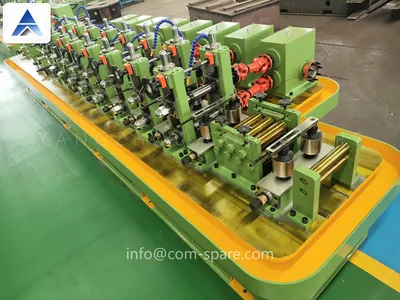 ProductERW Tube Mill LineComplete ERW lines from coil to bundle, Φ8–355 mm.View specifications →
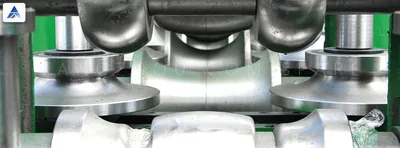 ProductERW Tube MillForming, welding, sizing and cut-off as one pass line.View specifications →
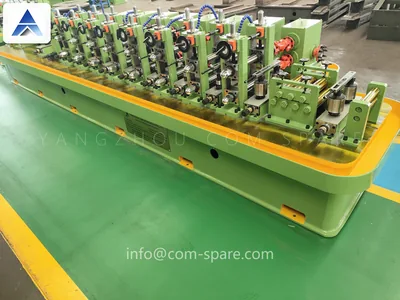 ProductHF Tube MillSolid-state welders sized to your heaviest wall.View specifications →
 ProductSteel Tube MillStrip width, wall and grade decide the whole layout.View specifications →
 ProductAutopacking MachineCount, stack and strap finished tubes.View specifications →
Need this checked on your own mill?
Send tube OD, wall thickness and the symptom. We reply within one working day.

