
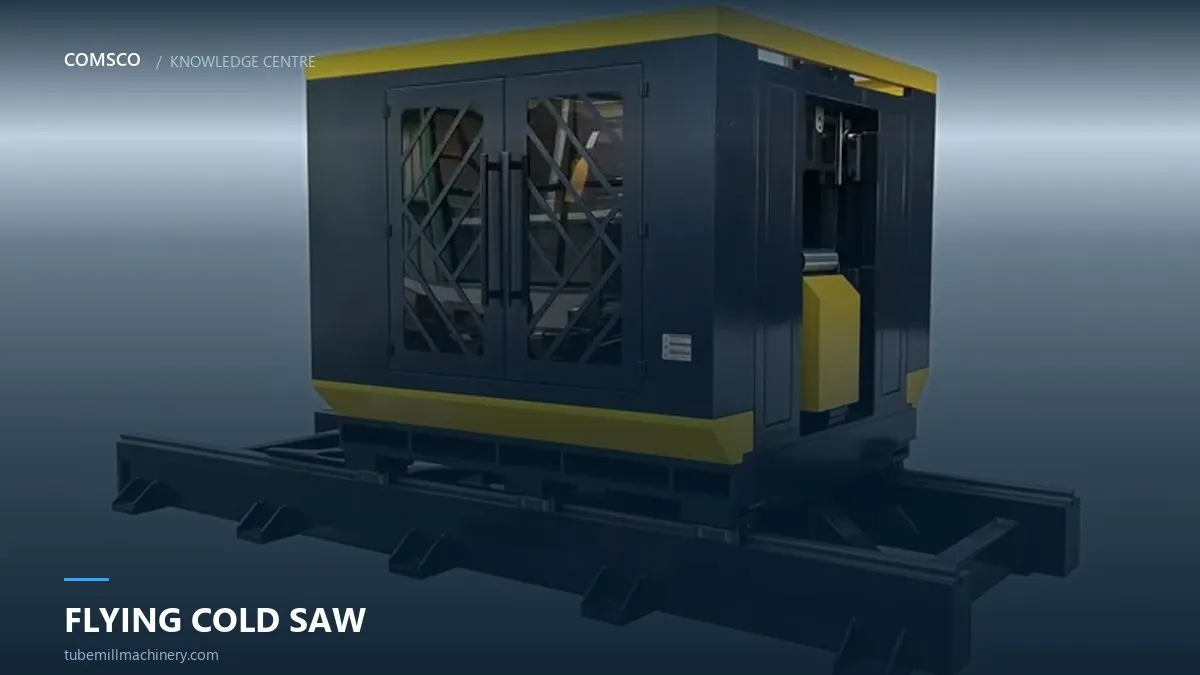
Cut length is the tolerance your customer measures with a tape. When it drifts, the instinct is to adjust the length setting, which treats the symptom. A flying cold saw determines length through three subsystems, and the pattern of the error tells you which one is at fault.
Subsystem 1: measurement — the encoder
The saw does not know how long the tube is; it knows how far the tube has travelled since the last cut. That measurement comes from an encoder running against the tube or against a measuring roll.
Common failure modes:
- Slip. If the measuring roll loses contact, or the tube surface is oily or scaled, the encoder under-reads and every length comes out long. The error is usually proportional, not random.
- Worn roll diameter. A measuring roll that has worn by 1% reads 1% short, and a 6 m length becomes 6.06 m. This is a slow drift that nobody notices until the customer does.
- Wrong parameter after maintenance. A replaced roll with a different diameter, entered with the old value, produces a constant percentage error.
How to recognise it: lengths are consistently long or short by a similar percentage, and the error does not depend on line speed.
Subsystem 2: clamping — timing and grip
The clamp has to grip the tube before the blade touches it, and hold it until the blade is clear. If clamping is late, the blade starts cutting a tube that is still moving freely; if pressure is low, the tube shifts during the cut.
Typical signs:
- Length varies randomly within a band of a few millimetres
- The first cut after a speed change is worst
- Cut faces show a step or a diagonal mark on one side
Clamp timing is set in the PLC and is usually adjustable. Clamp pressure is mechanical: worn jaws, tired springs, low hydraulic pressure. Both are maintenance items, and both are cheaper than the scrap they generate.
Subsystem 3: tracking — carriage acceleration and sync
A flying saw cuts while moving. The carriage accelerates to line speed, locks to the tube, cuts, releases and returns. Length accuracy during the cut depends on the carriage being genuinely synchronized with the tube, not approximately synchronized.
Failure modes:
- Loose carriage drive. Backlash in the rack and pinion or a worn linear guide lets the carriage lag under cutting load, and the blade drags the tube.
- Speed measurement lag. If the line speed signal is filtered too heavily, the carriage chases a value that is slightly old. At steady speed this is invisible; during acceleration it produces short or long first cuts.
- Servo tuning after repair. A replaced servo or drive that has not been re-tuned overshoots, and the error appears only at high line speed.
How to recognise it: error grows with line speed, and the first cut after a speed change is the outlier.
Reading the pattern
| Pattern | Most likely cause |
|---|---|
| All lengths long or short by a similar % | Encoder calibration or measuring roll wear |
| Random scatter ±2–5 mm | Clamp timing or pressure |
| Error increases with line speed | Carriage tracking, drive backlash, servo tuning |
| Only the first cut after change is wrong | Speed signal filtering / acceleration profile |
| Length correct but end is not square | Blade feed, guide wear, clamp not holding square |
What tolerance is realistic
A well-maintained servo flying saw on a stable line holds roughly ±1 mm on lengths up to 6 m. ±3 mm is typical of a mechanically tracked saw with a lighter control system. If a supplier promises ±0.5 mm, ask at what line speed, what tube size and with what measuring system — the number is only meaningful with those conditions attached.
Also remember that the tube itself moves. Thermal contraction after cutting means a tube measured hot is longer than the same tube measured cold an hour later. For tight tolerances, agree the measuring temperature and the measuring method with your customer, not just the number.
Maintenance that prevents most of it
- Check measuring roll diameter monthly and enter the true value.
- Inspect clamp jaws for wear and replace before they polish the tube.
- Check carriage backlash and guide condition at every major service.
- Keep a log of length error against line speed — trends show up before rejects do.
If you are specifying a new cut-off, our flying cold saw range uses servo tracking with encoder feedback, and the high-speed flying cut-off page covers the cycle-time side of the same decision.
Frequently asked questions
Why are my cut lengths always long by the same percentage?
A proportional error points to measurement rather than mechanics: encoder calibration, measuring roll wear, or a roll diameter entered incorrectly after replacement. Recalibrate against a measured length and check the roll diameter value.
What causes random cut length variation of a few millimetres?
Usually clamping: the clamp grips late or with insufficient pressure, so the tube moves during the cut. Worn jaws and low hydraulic pressure are the common causes.
Does line speed affect cut length accuracy?
It should not, but it often does when the carriage tracking is worn or the speed signal is over-filtered. If error grows with line speed, inspect the carriage drive and the servo tuning.
Keep reading

ERW Weld Seam Defects: A Diagnostic Order That Saves Time
A tube mill with a weld problem usually gets adjusted in the order the symptoms appear, and the symptoms appear…
HF Weld Power and Coolant: Setting Up for Thin Wall
Thin wall is where a tube mill stops being a forming machine and starts being a heat balance. Below about…

Tube Mill Roll Changeover: Where the Hours Actually Go
Ask a mill manager how long a size change takes and the answer is usually a number with a shrug:…
Strip Edge Quality Before the Mill: Slitting, Burr and Weld Defects
Half the weld defects blamed on the welder are decided before the strip reaches the first stand. Edge burr, camber…
Accumulator Sizing: How Many Seconds of Strip Your Line Really Needs
An undersized accumulator turns every coil change into a mill stop. Here is the calculation, the three accumulator types, and…
Shear & End Welder: The Coil Joint That Decides Your Weld Seam
The joint made at the entry section passes through every forming stand and arrives at the weld point. If defects…
Related Products
Machines that do the job described above — quoted station by station.
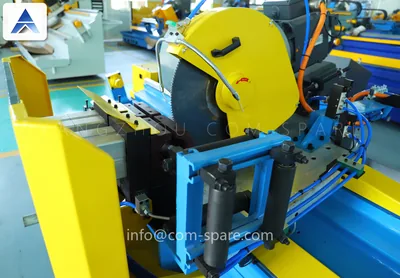 ProductFlying Cold SawBurr-free cut ends at line speed, no heat-affected zone.View specifications →
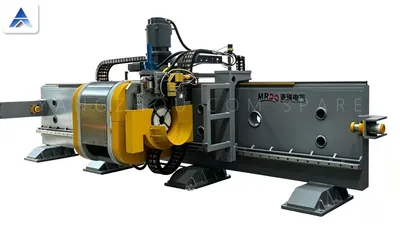 ProductTube Mill Flying Cold SawCarriage, clamp and encoder in one frame.View specifications →
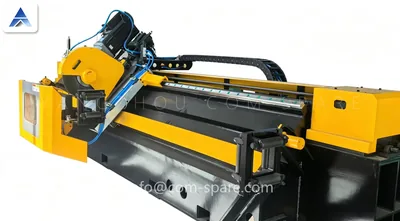 ProductHigh Speed Flying Cut-OffShort cycle times for thin-wall, high-volume tube.View specifications →
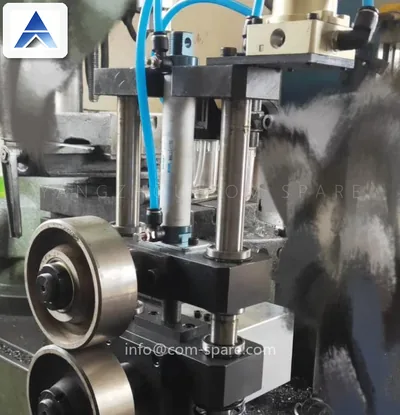 ProductMilling Type Orbital Cut OffOrbital milling for large OD and heavy wall.View specifications →
 ProductLaser Flying SawNo blade, no burr, no blade consumable.View specifications →
Need this checked on your own mill?
Send tube OD, wall thickness and the symptom. We reply within one working day.

